PepsiCo Cut Chip Prices to Win Back Shoppers. Now It's Raising Some. What to Watch in Its Oct. 8 Earnings
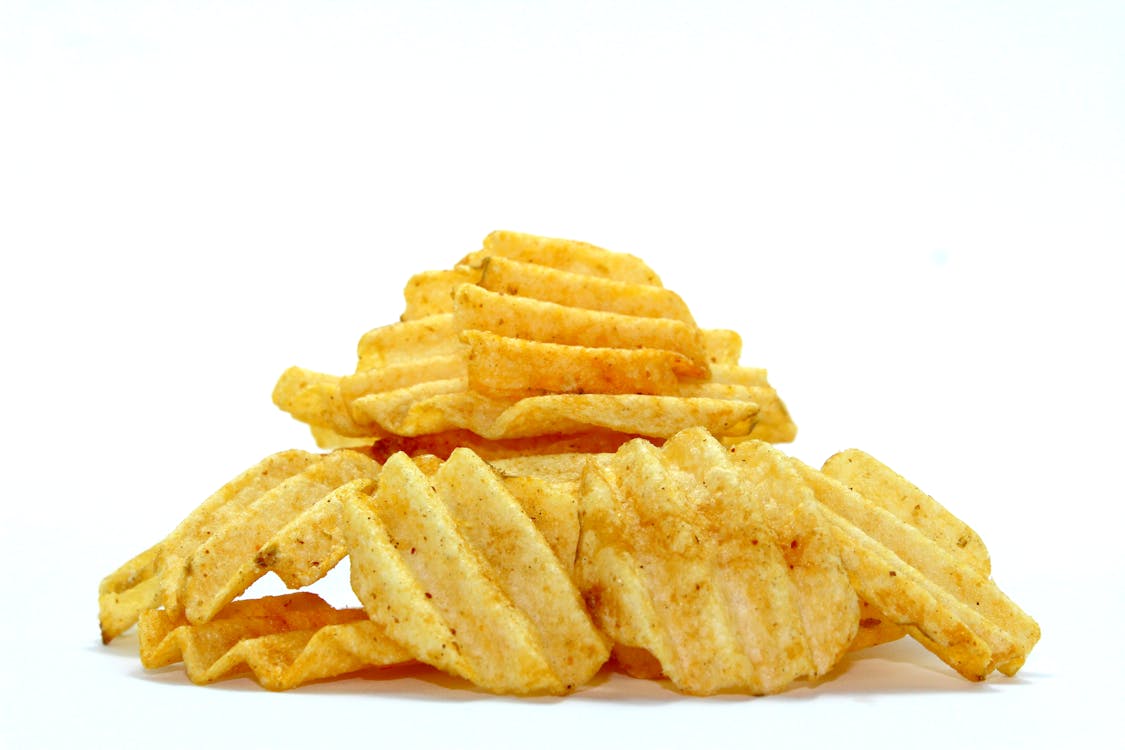
PepsiCo reports third-quarter 2026 results before the market opens on Oct. 8. Earlier this year it cut prices on popular snacks by up to nearly 15% to win back budget-squeezed shoppers, and in late September Bloomberg reported it plans to raise some chip, soda and dip prices again. This explainer uses PepsiCo as a case study in how consumer-staples companies trade price against volume, what terms like "organic revenue" and "effective net pricing" mean in an earnings release, and which numbers analysts have said they'll be watching.
Most investors notice snack prices at the checkout long before they see them in an earnings report. PepsiCo (PEP) is giving them a chance to watch both at once.
In February, the maker of Lay's, Doritos, Cheetos and Tostitos cut prices on those brands by up to nearly 15%, saying shoppers "shouldn't have to choose between great taste and staying within their budget." In late September, Bloomberg reported that PepsiCo plans to raise prices on some chips, sodas and dips. The company reports third-quarter results before the market opens on Thursday, Oct. 8.
That turnaround makes PepsiCo a useful real-world case study in one of the oldest trade-offs in business: price versus volume.
The basic math: price × volume
At its simplest, a consumer-products company's revenue is:
Revenue ≈ price per unit × number of units sold (volume)
Raise prices, and each sale brings in more money, but some shoppers may buy less or switch to a store brand. Cut prices, and you may sell more units, but each one earns less. How much demand changes in response to a price change is called price elasticity. When demand barely budges after a price increase, a company is said to have pricing power.
For several years after 2021, big snack and beverage makers leaned hard on price increases. Eventually, shoppers pushed back. According to Bloomberg, some bags of chips had topped $7 before PepsiCo's cuts, and the company had lost shelf space.
What happened after the price cuts
PepsiCo's second-quarter report in July offered an early read on how the cuts were working. Its North American snack business, PepsiCo Foods North America, reported that:
- Revenue fell 2%, which the company said mainly reflected "lower effective net pricing"
- Volume was flat for the quarter, though up 1% for the first half
- Core operating profit fell 8% ("core" is PepsiCo's adjusted measure, which leaves out certain items such as restructuring and impairment charges and mark-to-market gains or losses on commodity hedges)
- The company gained volume market share
In plain terms: the cuts helped PepsiCo hold or win share against competitors, but they didn't yet bring in enough extra volume to make up for the lower prices. CEO Ramon Laguarta said on the earnings call that second-quarter volume was not as strong as expected, pointing in part to consumers squeezed by higher gas prices.
Two earnings-release terms worth knowing
- Organic revenue: sales growth after stripping out currency swings, acquisitions and divestitures. It's meant to show how the underlying business is doing.
- Effective net pricing: the price actually realized after discounts, promotions and the mix of products sold, not just the sticker price.
The partial reversal: new chip, soda and dip price increases
According to Bloomberg's Sept. 24 report:
- Increases on grocery-store-size bags of Doritos, Ruffles, SunChips and other brands are expected at the end of this year or early 2027
- A PepsiCo spokesperson said chip increases would be a "low-to-mid single-digit percentage, aligned with inflation," and that new prices would remain below where they were before the cuts
- Some dip increases were already in place at Dollar General, and some soda increases are also expected
One important detail for the Oct. 8 report: PepsiCo's third quarter ended Sept. 5, so these new increases won't show up in third-quarter results. What investors may get instead is commentary on how the company plans to roll them out.
What analysts have said they'll watch
Heading into the report, analysts have flagged three things: North American snack volume, pricing commentary and whether the full-year outlook holds. The backdrop:
- Consensus: about $2.30 in earnings per share (EPS) on roughly $25 billion in revenue, versus $2.29 a year ago
- Full-year outlook: PepsiCo reaffirmed 2026 guidance in July for 2% to 4% organic revenue growth and 4% to 6% core constant-currency EPS growth (that is, excluding the effect of exchange rates). The CFO said full-year EPS may land toward the low end of the range
- Downgrades: Deutsche Bank and JPMorgan both moved to neutral-equivalent ratings (roughly, a "hold") in late September, with JPMorgan arguing the North American snack recovery stalled after the first quarter
- Stock: shares hit a 52-week low in September and closed at $125.89 on Oct. 2
What the options market is pricing
Benzinga Pro data put PepsiCo's implied move, the size of the post-earnings swing that option prices are signaling, at about 3.5% to 3.8% in either direction in early October, depending on the snapshot. Benzinga estimated the higher figure equals about $6.46 billion of market value on a roughly $172 billion market cap.
That's a modest number compared with many tech stocks, which fits PepsiCo's reputation as a lower-volatility consumer staple, the kind of everyday-goods company people keep buying from in good times and bad. An implied move is not a forecast of direction, and actual moves can be larger or smaller.
The activist backdrop: Elliott's role in the price cuts
The price cuts didn't come out of nowhere. In December 2025, PepsiCo announced a plan supported by activist investor Elliott Investment Management that included "sharper everyday value" pricing and cutting nearly 20% of U.S. product varieties. The company said it had already closed three plants, and it set a goal of at least 100 basis points (1 percentage point) of core operating margin expansion over three years. PepsiCo also said it would give a broader update on its North American supply chain and go-to-market review in late 2026.
The bigger lesson for investors
PepsiCo's year shows that pricing power isn't permanent. It can be built up, spent down and partly rebuilt. When reading any consumer-staples earnings release, it can help to separate the pieces:
- Is revenue growth coming from price, volume or both?
- Is market share rising or falling?
- What is happening to profit margins as prices change?
A company can win on one of these and lose on another in the same quarter, as PepsiCo's second quarter showed. Earnings reports can also move stocks sharply in either direction, and past patterns don't guarantee future results.
This article is educational commentary on public market events, not personalized investment, trading or tax advice.
« Back to all insights